
Sie benötigen ein UHF-RFID-Wäscheetikett, das in den anspruchsvollen Umgebungen von Hotels und Krankenhäusern zuverlässig funktioniert. Führende Branchenbewertungen und Verkaufsdaten heben die Serien TEX TRAK und CYKEO-70-15 als die langlebigsten Tags für diese Einsatzbereiche hervor. Diese Tag-Optionen überstehen mehr als 200 industrielle Waschzyklen und erreichen eine Genauigkeit von 98 % beim Lesen von Artikeln in großen Mengen. Ihre RFID-Technologie bietet eine größere Lesereichweite und eine robuste Konstruktion, sodass Sie Wäsche trotz hoher Hitze, Chemikalien und mechanischer Belastung zuverlässig verfolgen können.
Wählen Sie UHF-RFID-Wäschetags, die über 200 Waschzyklen überstehen, um eine zuverlässige Leistung zu gewährleisten.
Achten Sie auf Tags aus langlebigen Materialien wie TPU und Silikon, um Hitze, Chemikalien und mechanische Belastungen zu widerstehen.
Wählen Sie die richtige Befestigungsmethode, z. B. Nähen oder Heißversiegelung, um die Tags während der Wäscheprozesse sicher zu fixieren.
Berücksichtigen Sie Tags mit großer Lesereichweite, um die Effizienz bei der Verfolgung großer Artikelmengen zu verbessern.
Stellen Sie sicher, dass die Tags Branchenstandards für Temperatur- und Chemikalienbeständigkeit erfüllen, um die Funktionalität zu erhalten.
Kombinieren Sie verschiedene Tag-Typen je nach Wäschevolumen und Artikelarten, um eine optimale Nachverfolgungsgenauigkeit zu erreichen.
Integrieren Sie RFID-Tags in Ihre bestehenden Managementsysteme für Echtzeit-Transparenz und Kontrolle.
Überprüfen Sie regelmäßig Ihre Tag-Auswahl und Wäscheprozesse, um sich an veränderte Anforderungen anzupassen und die Effizienz aufrechtzuerhalten.
Wenn Sie ein UHF RFID laundry tag für Ihre Einrichtung auswählen, ist die Haltbarkeit der wichtigste Faktor. Die Wäschereiindustrie erfordert Tags, die wiederholter Exposition gegenüber aggressiven Chemikalien, hohen Temperaturen und ständiger mechanischer Belastung standhalten. Sie benötigen ein Tag, das über Hunderte von Waschzyklen hinweg seine Leistung und Zuverlässigkeit beibehält und so sicherstellt, dass Ihre Investition langfristigen Wert liefert.
Sie begegnen in Wäschereibetrieben einer Vielzahl von Chemikalien, darunter Waschmittel, Bleichmittel, Weichspüler und antimikrobielle Mittel. Ein langlebiges Radiofrequenz-Identifikations-Tag verwendet Einkapselungsmaterialien, die diesen Substanzen widerstehen. Dieses Design verhindert, dass Mikrochip und Antenne korrodieren oder ausfallen, selbst nach Kontakt mit aggressiven Reinigungsmitteln. In vielen Anwendungen bieten inerte Materialien wie Silikon oder PPS den notwendigen Schutz und machen das Tag sowohl für Hotel- als auch für Krankenhausumgebungen geeignet.
Industrielle Waschmaschinen und Trockner arbeiten bei hohen Temperaturen, oft bei 70–85 °C in Waschmaschinen und bis zu 180 °C in Trocknern. Ihr waschbares UHF-RFID-Tag muss diesen Extrembedingungen standhalten, ohne seine Funktion zu verlieren. Der Einkapselungsprozess schützt die internen Komponenten vor Wassereintritt und thermischer Belastung. Dadurch bleibt das Tag auch nach Hunderten von Zyklen funktionsfähig, selbst bei Sterilisation durch Hitze oder kontinuierlichem Trocknen. Ein flexibles und waschbares RFID-Tag passt sich zudem der Bewegung und Dehnung von Textilien an und behält langfristig seine Integrität.
Wäscheprozesse umfassen Schleudern, Wringen, Pressen, Falten und Dehnen. Sie benötigen ein passives RFID-Tag, das diese Kräfte aufnehmen kann, ohne zu reißen oder zu brechen. Flexible TPU- und Silikongehäuse helfen dem Tag, wiederholtes Biegen und Verdrehen zu überstehen. Diese mechanische Widerstandsfähigkeit ist entscheidend für Tags, die in Bettwäsche eingenäht oder in Uniformen integriert sind, wo ständige Bewegung unvermeidbar ist.
Hinweis: Die Konstruktion jedes Tags, einschließlich robuster Materialien und sicherer Einkapselung, spielt eine entscheidende Rolle beim Schutz des Mikrochips und der Antenne vor Wasser, Hitze und Druck. Dieser Ansatz ermöglicht es vielen Tags, mehr als 200 industrielle Waschzyklen zu überstehen – ein Maßstab für Zuverlässigkeit in der Wäschereibranche.
Sie sollten nach Tags suchen, die anerkannte Industriestandards und Zertifizierungen erfüllen. Diese Standards stellen sicher, dass Ihre RFID-Tags in anspruchsvollen Umgebungen zuverlässig funktionieren:
Temperaturbeständigkeit: Tags müssen industriellen Waschmaschinen (70–85 °C) und Trocknern (150–180 °C) standhalten, wobei einige bis zu 200 °C ausgelegt sind.
Chemische Beständigkeit: Verkapselungsmaterialien müssen Reinigungsmitteln, Bleichmitteln und anderen Reinigungschemikalien standhalten.
Mechanische Belastung: Flexible Gehäuse absorbieren wiederholtes Biegen, Wringen und Falten.
Waschzyklus-Bewertungen: Viele Tags sind für 200 oder mehr Zyklen ausgelegt, einige textilbasierte Tags erreichen über 500 Zyklen.
OEKO-TEX-Zertifizierung: Dieser Standard stellt sicher, dass Materialien hautverträglich sind, was besonders in Krankenhaus- und Hotelumgebungen wichtig ist.
Durch das Verständnis dieser Kriterien und Standards können Sie sicher den richtigen UHF-RFID-Tag für Ihre Wäschereibetriebe auswählen. Der richtige Tag bietet eine gleichbleibende Leistung, senkt Ersatzkosten und unterstützt eine effiziente Nachverfolgung in all Ihren Anwendungen.
Sie benötigen einen Tag, der den härtesten Bedingungen im Wäschereibetrieb standhält. Hersteller verwenden fortschrittliche Materialien, um die internen Komponenten jedes RFID-Tags zu schützen. Gängige Verkapselungsmaterialien sind:
TPU (Thermoplastisches Polyurethan): Schützt den Tag vor Wasser, Hitze und Chemikalien und macht ihn ideal für wiederholte Waschvorgänge.
Silikon: Bietet Flexibilität und Umweltbeständigkeit, wodurch sich der Tag an verschiedene Textilarten anpassen kann.
Epoxidharz: Bietet robusten Schutz gegen mechanische Belastung und stellt sicher, dass der Tag auch bei intensiver Nutzung intakt bleibt.
PPS (Polyphenylensulfid): Bekannt für seine Hitzebeständigkeit und chemische Dauerhaftigkeit, eignet sich PPS für Umgebungen mit extremen Temperaturen und aggressiven Reinigungsmitteln.
Gewebe: Wird manchmal in Kombination mit anderen Materialien für spezialisierte Anwendungen verwendet.
Diese Materialien arbeiten zusammen, um sicherzustellen, dass der Tag seine Integrität behält und selbst nach Hunderten von Waschzyklen eine gleichbleibende Leistung liefert.
Die Größe und Form Ihres Wäscherei-Tags spielen eine entscheidende Rolle sowohl für die Haltbarkeit als auch für die Benutzerfreundlichkeit. Sie benötigen einen Tag, der sich nahtlos in Bettwäsche, Uniformen oder Handtücher einfügt, ohne Unbehagen zu verursachen oder den täglichen Betrieb zu beeinträchtigen. Die folgende Tabelle hebt die wichtigsten Spezifikationen hervor:
|
Merkmal |
Details |
|---|---|
|
Abmessungen |
Durchmesser: 15–26 mm; Dicke: 2,5–3 mm |
|
RFID-Frequenz |
UHF (860-960 MHz) oder HF (13.56 MHz) |
|
Waschzyklen |
200+ Zyklen garantiert |
|
Betriebstemperatur |
-25 °C bis 90 °C Waschen, 200–220 °C Bügeln (kurzzeitig) |
|
Wasserbeständigkeit |
IP68 |
|
Chemische Beständigkeit |
Ja – Reinigungsmittel, Laugen, milde Säuren |
|
Befestigung |
Annählöcher oder Option zum Heißsiegeln |
|
Datenspeicherung |
Über 10 Jahre |
Ein kompaktes und schlankes Design ermöglicht es dem Tag, sich in Textilien einzufügen, während eine hohe Leseleistung erhalten bleibt. Dadurch können Sie große Mengen an Artikeln effizient nachverfolgen, was für stark frequentierte Hotel- und Krankenhausumgebungen entscheidend ist.
Sie benötigen eine sichere Befestigungsmethode, um den Verlust des Tags während des anspruchsvollen Wäscheprozesses zu verhindern. Die effektivsten Methoden sind:
Aufgenäht: Sie können textilbasierte Etiketten direkt auf Kleidungsstücke oder Wäsche nähen. Diese Methode bietet eine schnelle und zuverlässige Lösung.
Durch Hitze versiegelt: Wärme und Druck verbinden das Etikett mit dem Textil und erzeugen ein sauberes und langlebiges Finish. Diese Option eignet sich gut, wenn Nähen nicht praktikabel ist.
In einer Tasche: Das Platzieren des Etiketts in einer Stofftasche oder einem Saum hält es verborgen und sicher. Diese Methode ist besonders nützlich für Artikel mit mehreren Schichten.
Die Wahl der richtigen Befestigungsmethode stellt sicher, dass das Etikett während des gesamten Lebenszyklus des Textils an Ort und Stelle bleibt, wodurch Austauschkosten reduziert und die betriebliche Effizienz verbessert werden.
Sie benötigen einen UHF-RFID-Wäscheanhänger, der sowohl bei der Lesereichweite als auch beim Stapelscannen eine starke Leistung bietet. Diese Funktionen wirken sich direkt darauf aus, wie effizient Sie Textilien in Hotels und Krankenhäusern verfolgen und verwalten. Ein Etikett mit großer Lesereichweite ermöglicht es Ihnen, Artikel aus der Entfernung zu scannen und so den Bedarf an manueller Handhabung zu reduzieren. Stapelscannen ermöglicht es Ihnen, Hunderte von Artikeln gleichzeitig zu verarbeiten, wodurch Zeit gespart und Fehler minimiert werden.
|
Merkmal |
Vorteil |
|---|---|
|
Lesereichweite |
Über 30 Meter |
|
Effizienz des Stapelscannens |
Ermöglicht Echtzeitverfolgung und schnellere Sortierung |
|
Betriebliche Effizienz |
Reduziert manuelle Fehler und verbessert die Genauigkeit |
Sie profitieren von mehreren Vorteilen, wenn Sie Etiketten mit erweiterter Lesereichweite und Stapelscan-Funktionen verwenden:
Echtzeitverfolgung von Wäschestücken
Schnellere Sortierung und Bestandsverwaltung
Reduzierte Verluste und manuelle Fehler
Verbesserte betriebliche Effizienz
Besseres Lebenszyklusmanagement von Textilien
Sie können gekennzeichnete Wäsche oder Uniformen in einen Wagen oder Behälter legen und sie alle auf einmal scannen. Dieser Prozess optimiert die Bestandsprüfungen und stellt sicher, dass jedes einzelne Teil erfasst wird. Sie vermeiden Engpässe während geschäftiger Schichten und führen genaue Aufzeichnungen ohne zusätzlichen Arbeitsaufwand. Das Stapelscannen unterstützt außerdem die automatisierte Sortierung, wodurch Sie saubere Textilien schnell an die richtige Abteilung liefern können.
Tipp: Wählen Sie Tags mit nachgewiesener Leistung beim Stapelscannen. Sie werden sofortige Verbesserungen bei Arbeitsablaufgeschwindigkeit und Genauigkeit sehen.
Sie möchten einen Wäschetag, der wiederholtem Waschen standhält, ohne an Leistung zu verlieren. Die Haltbarkeit in Waschzyklen ist ein wichtiger Indikator für die Qualität eines Tags. Hochwertige waschbare RFID-Tags von renommierten Herstellern können zwischen 200 und 300 Waschzyklen überstehen. Einige Marken wie GAO RFID, Datamars und HID Global sind dafür bekannt, Tags herzustellen, die Hunderte von gewerblichen Wäschen überstehen.
PPS-Polymer, ein in industriellen Wäschediensten verwendetes Material, hat eine außergewöhnliche Haltbarkeit gezeigt. Wenn es mittels Ultraschallverfahren verarbeitet wird, haben PPS-Tags in Hotelbetrieben über 500 Waschzyklen standgehalten. Dieses Maß an Widerstandsfähigkeit stellt sicher, dass Sie den maximalen Wert aus jedem Tag ziehen und Ersatzkosten sowie Ausfallzeiten reduzieren.
Sie sollten Tags wählen, die für mindestens 200 Waschzyklen ausgelegt sind, um eine zuverlässige Leistung zu gewährleisten. Diese Bewertung bedeutet, dass der Tag auch nach Kontakt mit Reinigungsmitteln, hohen Temperaturen und mechanischer Belastung weiterhin funktioniert. Sie schützen Ihre Investition und gewährleisten eine konsistente Nachverfolgung während des gesamten Lebenszyklus des Textils.
Hinweis: Unterstützte Waschzyklen spiegeln die Fähigkeit des Tags wider, harschen Wäschebedingungen standzuhalten. Sie profitieren von weniger Ersatz und unterbrechungsfreiem Service.
Sie profitieren von einem Tag, der für anspruchsvolle Wäscherei-Umgebungen entwickelt wurde.
Der Tag ist beständig gegen Wasser, Chemikalien und hohe Temperaturen und gewährleistet eine gleichbleibende Leistung.
Das Nähdesign ermöglicht eine einfache Integration in Bettwäsche und Uniformen.
Sie erreichen eine zuverlässige Bestandsverfolgung mit hoher Lesegenauigkeit.
Der Tag muss angenäht werden, was die Installation zeitlich aufwändiger machen kann.
Sie müssen möglicherweise anfänglichen Arbeitsaufwand einplanen, wenn Sie ihn in großen Textilbeständen einsetzen.
Der RFID-Wäschetag zeigt eine beeindruckende Haltbarkeit. Sie können sich auf seine Beständigkeit gegen Wasser, Chemikalien und mechanische Belastung verlassen. Labortests bestätigen, dass der Tag wiederholter Exposition gegenüber starken Reinigungsmitteln und hoher Hitze standhält. Sie sehen eine stabile Leistung nach Hunderten von Waschzyklen, was ihn zu einer starken Wahl für Hotel- und Krankenhausanwendungen macht.
Hotels und Krankenhäuser berichten, dass der RFID-Wäschetag gleichbleibende Ergebnisse liefert. Sie bemerken weniger verlorene Gegenstände und eine verbesserte Nachverfolgungsgenauigkeit. Das Personal schätzt die Zuverlässigkeit des Tags bei Stapelscans und Inventurprüfungen. Viele Nutzer heben die Langlebigkeit des Tags hervor sowie seine Fähigkeit, die Leistung auch nach häufigem Waschen aufrechtzuerhalten.
Sie profitieren von Flexibilität und Haltbarkeit durch die Silikonkonstruktion.
Der Tag ist wasserdicht und chemikalienbeständig, ideal für industrielle Wäschereianwendungen.
Das weiche Silikongehäuse sorgt für Komfort und Sicherheit für Textilien und Haut.
Sie profitieren von einer langen Lebensdauer, wobei die Lesbarkeit über 200–300 Waschzyklen erhalten bleibt.
Das weiche Material des Tags kann bei der Installation vorsichtiges Handling erfordern.
Möglicherweise müssen Sie die richtige Befestigungsmethode für bestimmte Textilarten auswählen.
Nylon-RFID-Wäschetags überzeugen in Haltbarkeitstests. Sie sehen, dass der Tag Temperaturen von bis zu 180°C standhält, was ihn für Sterilisation und Trocknung geeignet macht. Der Tag widersteht Reinigungsmitteln, Laugen und Säuren und behält seine Leistung in rauen Umgebungen bei. Das flexible Silikongehäuse schützt die internen Komponenten und stellt sicher, dass der Tag nach wiederholtem Waschen funktionsfähig bleibt.
Hitzebeständigkeit: Hält Temperaturen von bis zu 180°C stand.
Wasserdicht und chemikalienbeständig: Funktioniert gut mit Waschmitteln und Reinigungschemikalien.
Lange Lebensdauer: Behält die Lesbarkeit über mehr als 200–300 Waschzyklen bei.
Flexibles Silikongehäuse: Weich, langlebig und sicher bei direktem Kontakt.
Sie erhalten positives Feedback von Hotels und Krankenhäusern, die Silikon-Wäschetags verwenden. Das Personal berichtet, dass die Tags nach der Installation kaum spürbar sind. Nutzer schätzen die Haltbarkeit und Flexibilität des Tags, insbesondere bei Anwendungen mit Schutzkleidung und industrieller Arbeitskleidung. Viele Einrichtungen verzeichnen eine verbesserte Effizienz und weniger Verluste in ihren Wäschereiprozessen.
Sie profitieren von einem Tag, der sich nahtlos in Textilien einfügt.
Epoxidbeschichtete Gewebe-Tags bieten starken Schutz vor mechanischer Belastung.
Der Tag unterstützt eine zuverlässige Bestandsverfolgung in groß angelegten Wäschereibetrieben.
Die Leistung des Tags kann je nach Textil und Waschprozess variieren.
Sie müssen Tags möglicherweise in Hochbelastungszyklen auf Verschleiß überwachen.
|
Testbedingungen |
Anfängliche Lesereichweite |
Lesereichweite nach 15 Wäschen |
Beobachtungen zur mechanischen Belastung |
|---|---|---|---|
|
Epoxidbeschichteter Textil-Wäsche-Tag |
8 Meter |
7 Meter |
Tags können aufgrund mechanischer Belastung beim Waschen ausfallen. |
|
Andere UHF-RFID-Tags |
N/A |
N/A |
Die Leistung variiert; einige halten dem Waschen möglicherweise nicht stand. |
Textile Wäsche-Tags zeigen eine starke anfängliche Lesereichweite und behalten die Leistung nach mehreren Waschzyklen bei. Die Epoxidbeschichtung hilft, vor mechanischer Belastung zu schützen. Sie erzielen in den meisten Anwendungen zuverlässige Ergebnisse, wobei jedoch eine Überwachung auf Verschleiß empfohlen wird.
Die Schweizer Hotelgruppe berichtet über messbare Verbesserungen bei den Arbeitskosten, der Gästezufriedenheit, der Lagerbestandsübersicht und der Skalierbarkeit der Effizienz nach der Implementierung von RFID-Wäscheetiketten.
Industrietaugliche Etiketten halten hohen Temperaturen und Hochdruckzyklen stand und gewährleisten so die Langlebigkeit im gewerblichen Einsatz.
Die Etiketten sind chemikalienbeständig und überstehen bis zu 200 Waschzyklen, was ihre Zuverlässigkeit unter harten Wäschebedingungen zeigt.
Sie stellen fest, dass Hotels und Krankenhäuser den Wert der Etiketten für die Verbesserung der Betriebseffizienz schätzen. Das Personal meldet weniger verlorene Gegenstände und eine bessere Bestandskontrolle. Viele Nutzer heben die Robustheit der Etiketten und deren positiven Einfluss auf das Wäschereimanagement hervor.
Hinweis: Wenn Sie ein waschbares UHF-RFID-Etikett auswählen, stellen Sie eine zuverlässige Bestandsverfolgung und langfristigen Nutzen für Ihre Einrichtung sicher. Jeder Etikettentyp bietet einzigartige Vorteile für verschiedene Anwendungen und hilft Ihnen, Ihre Wäschereibetriebe zu optimieren.
Sie benötigen ein Etikett, das den Anforderungen der Wäschereibranche standhält. Haltbarkeitsbewertungen helfen Ihnen, zu vergleichen, wie gut jedes Etikett nach wiederholtem Kontakt mit Wäsche, Chemikalien und Hitze abschneidet. Die meisten führenden Etiketten überstehen über 200 industrielle Waschzyklen. Premium-Optionen erreichen 300 Zyklen oder mehr. Dieses Maß an Haltbarkeit gewährleistet zuverlässige Leistung und langfristigen Nutzen.
Hinweis: Die Wahl eines Etiketts mit hoher Haltbarkeitsbewertung senkt die Ersatzkosten und hält Ihre Wäschereibetriebe reibungslos am Laufen.
Sie möchten sehen, wie die Top-Etiketten in Bezug auf Material, Lesereichweite und unterstützte Waschzyklen abschneiden. Die folgende Tabelle bietet Ihnen einen klaren Überblick:
|
Funktion |
Beschreibung |
|---|---|
|
Material |
Hitzeversiegelte, eingenähte, Knopf- und Silikonetiketten. |
|
Lesereichweite |
UHF-Etiketten können bis zu 6 Meter gelesen werden, wodurch ein Stapelscan mehrerer Gegenstände gleichzeitig möglich ist. |
|
Unterstützte Waschzyklen |
Entwickelt, um über 200 industrielle Waschzyklen zu überstehen, mit Premium-Etiketten für über 300 Zyklen. |
Sie können das Material auswählen, das Ihren Anforderungen entspricht. Silikon-Tags bieten Flexibilität und Komfort. Eingenähte Etiketten sorgen für eine sichere Befestigung. Stapel-Scanning mit UHF-Technologie beschleunigt die Inventurprüfungen. Unterstützte Waschzyklen zeigen Ihnen, welche Tags in rauen Umgebungen länger halten.
Sie möchten den Wert für Ihre Einrichtung maximieren. Die Preisbereiche variieren je nach Tag-Typ und Haltbarkeit. Die folgende Tabelle hilft Ihnen, die Optionen zu vergleichen:
|
Tag-Typ |
Preisbereich |
|---|---|
|
Eingenähte Etiketten |
$1.50 – $3.50 |
|
Clip-On-Tags |
$2.00 – $5.00 |
|
Wäscherei-geeignete Tags |
$4.00 – $8.00 |
Höhere Preise spiegeln oft eine bessere Chipqualität und erhöhte Haltbarkeit wider. Die Investition in Tags der mittleren Preisklasse kann langfristig einen besseren Wert bieten. Sie vermeiden häufige Ersatzbeschaffungen und profitieren von einer gleichbleibenden Leistung. Wäscherei-geeignete Tags bieten robusten Schutz und eine verlängerte Lebensdauer, wodurch sie ideal für Hotels und Krankenhäuser sind.
Tipp: Berücksichtigen Sie sowohl Preis als auch Haltbarkeit bei der Auswahl der Tags. So erreichen Sie die beste Balance zwischen Leistung und Wert für Ihre Wäschereiprozesse.
Sie gewinnen Effizienz und Zuverlässigkeit, indem Sie Tags wählen, die zu den Anforderungen Ihrer Einrichtung passen. Der Vergleich von Funktionen und Preisen hilft Ihnen, fundierte Entscheidungen zu treffen. So stellen Sie sicher, dass Ihr Wäsche-Tracking-System Genauigkeit und Langlebigkeit liefert.
Die Auswahl des richtigen Tags für Ihre Wäscherei beginnt mit einem klaren Verständnis Ihres Wäschemixes und täglichen Volumens. Hotels und Krankenhäuser verarbeiten oft eine große Bandbreite an Textilien, von Bettlaken bis hin zu dicken Handtüchern. Jede Kategorie erfordert einen anderen Ansatz, um eine zuverlässige Nachverfolgung und effiziente Verwaltung sicherzustellen.
Sie sollten damit beginnen, die Arten von Artikeln zu analysieren, die in Ihrer Einrichtung verarbeitet werden. Die richtige Wahl des Tags hängt vom Anteil an flachen Textilien, Handtüchern und Spezialartikeln in Ihrem Bestand ab. Berücksichtigen Sie bei der Bewertung Ihres Wäschevolumens die folgenden Richtlinien:
Wenn Ihr Wäschemix zu mehr als 65 % aus flachen Artikeln wie Bettlaken und Kissenbezügen besteht, bieten textile Stoff-Tags die beste Leistung. Diese Tags lassen sich nahtlos in flache Textilien integrieren und liefern konstante Lesequoten.
Wenn Handtücher und dicke Frottee-Artikel mehr als 30 % des Bestands ausmachen, teilen Sie Ihre Bestellung auf. Verwenden Sie textile Tags für flache Wäsche und Silikon-Tags für Handtücher. Dieser Ansatz stellt sicher, dass jeder Artikeltyp den am besten geeigneten Tag für Haltbarkeit und Lesbarkeit erhält.
Vermeiden Sie die Verwendung eines einzigen Tag-Typs für alle Wäschekategorien. Die Mischung verschiedener Tag-Typen trägt dazu bei, eine hohe Lesegenauigkeit zu gewährleisten und inkonsistente Ergebnisse zu vermeiden, insbesondere in gewerblichen Wäschereien mit vielfältigen Textilbeständen.
Durch die Anpassung des Tag-Typs an Ihr Wäscheaufkommen und Ihren Artikelmix verbessern Sie die Effizienz der Nachverfolgung und reduzieren das Risiko nicht gelesener Artikel. Diese Strategie hilft Ihnen außerdem, eine kosteneffiziente Wäscherei-Tag-Lösung auszuwählen, die Ihren betrieblichen Anforderungen entspricht. Wenn Sie die richtigen RFID-Tags für Ihre Einrichtung wählen, unterstützen Sie reibungslose Arbeitsabläufe und eine zuverlässige Bestandskontrolle in Hotel- und Krankenhausumgebungen.
Tipp: Überprüfen Sie Ihr Wäscheaufkommen regelmäßig. Passen Sie Ihre Tag-Auswahl an, wenn sich Ihr Bestand verändert, um eine optimale Leistung in Ihrem UHF-Wäscherei-System aufrechtzuerhalten.
Sie möchten, dass sich Ihr RFID-Wäschereisystem nahtlos in die Arbeitsabläufe Ihrer Einrichtung einfügt. Integrations- und Anpassungsoptionen helfen Ihnen dabei, dieses Ziel zu erreichen. Moderne UHF-RFID-Wäsche-Tags bieten flexible Lösungen, die sich an Ihre bestehenden Prozesse und Technologieplattformen anpassen.
Sie können RFID-Tags über branchenübliche Schnittstellen mit Ihren bestehenden Managementsystemen verbinden. Viele Einrichtungen nutzen ERP- oder Materialwirtschaftssysteme zur Verwaltung von Beständen und Betriebsabläufen. Sie können RFID-Daten direkt in diese Plattformen integrieren, um Echtzeit-Transparenz und -Kontrolle zu erhalten. Die folgende Tabelle zeigt gängige Integrationsmethoden:
|
Integrationsmethode |
Beschreibung |
|---|---|
|
REST-APIs |
Verbindet RFID-Daten mit ERP- und Materialwirtschaftssystemen. |
|
HL7-Schnittstellen |
Ermöglichen den Datenfluss im Gesundheitswesen. |
Sie erhalten die Möglichkeit, den Datenaustausch zwischen Ihrem Wäscherei-Tracking-System und anderen Geschäftsanwendungen zu automatisieren. Diese Integration reduziert manuelle Eingaben, verbessert die Genauigkeit und beschleunigt das Reporting. In Gesundheitsumgebungen stellen HL7-Schnittstellen sicher, dass die Wäscheverfolgung mit Patientenversorgung und Infektionskontrollprotokollen übereinstimmt.
Anpassungsoptionen ermöglichen es Ihnen, RFID-Tags an die individuellen Anforderungen Ihrer Einrichtung anzupassen. Sie können aus einer Reihe von Funktionen wählen, um Ihre betrieblichen Anforderungen zu erfüllen:
Maßgeschneiderte Größen für verschiedene Arten von Wäsche, Uniformen oder Spezialtextilien.
Chip-Auswahl basierend auf Speicherkapazität, Sicherheitsfunktionen oder Lesereichweite.
Kodierungsdienste für Großbestellungen, sodass jedes Tag vorprogrammiert geliefert wird und einsatzbereit ist.
Verpackungsoptionen, die zu Ihren Handhabungs- und Lagerpräferenzen passen.
Sie können außerdem spezifische Kodierungsformate anfordern, die zu Ihrem Bestandsnummerierungssystem passen. Dieser Ansatz vereinfacht die Implementierung und stellt die Kompatibilität mit Ihren bestehenden Datenbanken sicher. Einige Anbieter bieten Bulk-Kodierungsdienste an, die Ihnen Zeit bei groß angelegten Rollouts sparen.
Tipp: Arbeiten Sie frühzeitig mit Ihrem RFID-Anbieter zusammen, um Ihre Integrations- und Anpassungsanforderungen zu definieren. Klare Anforderungen helfen Ihnen, Verzögerungen zu vermeiden und eine reibungslose Implementierung sicherzustellen.
Sie profitieren von einer Lösung, die mit Ihrer Einrichtung mitwächst. Wenn das Volumen Ihrer Wäsche zunimmt oder sich Ihre Technologie weiterentwickelt, können Sie die Spezifikationen der Tags und die Integrationspunkte anpassen. Diese Flexibilität unterstützt langfristige Effizienz und hilft Ihnen, hohe Standards im Textilmanagement aufrechtzuerhalten.
Sie stellen sicher, dass Ihre RFID-Wäscheetiketten nicht nur widrigen Bedingungen standhalten, sondern auch perfekt in Ihr Betriebssystem passen. Mit der richtigen Integration und Anpassung maximieren Sie den Wert Ihrer Investition und fördern bessere Ergebnisse für Ihr Personal und Ihre Gäste.
Sie können die Auswirkungen der UHF-RFID-Technologie in Hotelwäschereien durch messbare Verbesserungen sehen. Hotels, die diese Lösungen eingeführt haben, berichten von erheblichen Zuwächsen in Genauigkeit, Effizienz und Kostenkontrolle. Die folgende Tabelle fasst die wichtigsten erwartbaren Ergebnisse zusammen:
|
Ergebnis |
Beschreibung |
|---|---|
|
Inventargenauigkeit |
RFID-Tags ermöglichen ein schnelles Scannen, liefern genaue Stückzahlen der Kleidungsstücke und reduzieren Fehler. |
|
Echtzeit-Tracking |
Ermöglicht nahtloses Überwachen der Kleidungsstücke während des Wäschereiprozesses und verbessert die Verantwortlichkeit. |
|
Reduzierung der Arbeitskosten |
Laut dem American Cleaning Institute kann RFID-Technologie die Arbeitskosten um 30 % senken. |
|
Verlustprävention |
Hilft, verlorene oder fehlplatzierte Artikel durch besseres Asset-Tracking zu verhindern. |
|
Optimierte Bestandsprüfungen |
Ermöglicht das Massenlesen von markierten Artikeln, reduziert manuellen Aufwand und verbessert die Betriebseffizienz. |
|
Verbesserte Prognosen und Abrechnung |
Unterstützt bessere Prognosen, Abrechnungsgenauigkeit und Verantwortlichkeit in Umgebungen mit hohem Durchsatz. |
Sie profitieren von schnelleren Bestandsprüfungen und weniger verlorenen Artikeln. Das Personal kann Hunderte von Bettwäsche- oder Uniformteilen in Sekunden scannen, was den manuellen Aufwand und Fehler reduziert. Hotels nutzen RFID auch, um eine breite Palette von Textilartikeln zu verfolgen, einschließlich Handtücher, Bettwäsche und Mitarbeiteruniformen. Diese Technologie unterstützt bessere Prognosen und Abrechnungen, was in Umgebungen mit hohem Durchsatz entscheidend ist.
Krankenhäuser stehen vor einzigartigen Herausforderungen im Wäschemanagement, wie Compliance, Audit-Bereitschaft und Verlustreduzierung. Diese Herausforderungen können Sie durch den Einsatz von UHF-RFID-Tags adressieren, die in realen Krankenhausanwendungen starke Ergebnisse liefern. Die folgende Tabelle hebt die wichtigsten Vorteile hervor:
|
Vorteil |
Beschreibung |
|---|---|
|
Verlustreduzierung |
RFID-Wäscheverfolgung kann den Textilverlust um 20 bis 40 Prozent reduzieren, indem sie Transparenz darüber schafft, wo sich Artikel im Wäschereiprozess befinden, und so Schrumpfungsprobleme wirksam adressiert. |
|
Arbeitsersparnis |
Organisationen berichten über eine Reduzierung des manuellen Zählaufwands um 70 bis 90 Prozent durch RFID-Massen-Scans, wodurch sich Mitarbeitende auf höherwertige Aufgaben konzentrieren können. |
|
Bestandsgenauigkeit |
RFID-Systeme erreichen eine Genauigkeit von über 99 % bei der Nachverfolgung von Artikeln, wodurch Krankenhäuser ihre Überbestände um 15 bis 25 Prozent reduzieren können, während sie das Serviceniveau beibehalten und so die betriebliche Effizienz verbessern. |
|
Compliance- und Audit-Bereitschaft |
RFID erstellt eine automatische Audit-Spur für die Wäschehandhabung und gewährleistet die Einhaltung von Gesundheitsvorschriften ohne zusätzliche manuelle Aufzeichnungen, was die betriebliche Effizienz erhöht. |
Sie gewinnen eine bessere Kontrolle über textile Vermögenswerte und reduzieren Verluste. Mitarbeitende verbringen weniger Zeit mit manuellen Zählungen und mehr Zeit mit der Patientenversorgung. Das System bietet eine automatische Audit-Spur, die Ihnen hilft, regulatorische Anforderungen ohne zusätzlichen Papieraufwand zu erfüllen. Krankenhäuser berichten außerdem über verbesserte Bestandsgenauigkeit, wodurch Sie weniger Ersatzwäsche vorhalten müssen, während die Servicequalität erhalten bleibt.
Sie können die Haltbarkeit und Leistung Ihrer RFID-Wäsche-Tags durch die Befolgung bewährter Verfahren maximieren:
Beginnen Sie mit einem Pilotprojekt, um Tags, Leser und Software-Workflows im kleinen Maßstab zu testen.
Optimieren Sie die Platzierung der Lesegeräte mithilfe von Richtantennen, um Lesebereiche zu fokussieren und Streulesungen zu minimieren.
Kalibrieren Sie die Leistung und Empfindlichkeit der Lesegeräte, um zuverlässige Lesevorgänge ohne Interferenzen sicherzustellen.
Schulen Sie Ihr Team mit praxisnahen Anweisungen zur Platzierung der Tags und zur Bedienung der Lesegeräte.
Überwachen und warten Sie Ihr System durch regelmäßige Audits der Leserleistung und der Integrität der Tags.
In einer Studie fanden Forscher heraus, dass unebene Stoffoberflächen Brüche in schmalen Leitern verursachen können. Das Aufbringen harter Beschichtungen auf dem Tag kann helfen, Brüche während der Waschzyklen zu verhindern.
Sie sollten Ihren Ansatz stets an die Bedürfnisse Ihrer Einrichtung anpassen. Wenn Sie klein beginnen und schrittweise skalieren, reduzieren Sie Risiken und sorgen für einen reibungslosen Übergang. Regelmäßige Schulungen und Wartung halten Ihr System effizient am Laufen und unterstützen langfristigen Erfolg in allen Ihren Wäschereianwendungen.
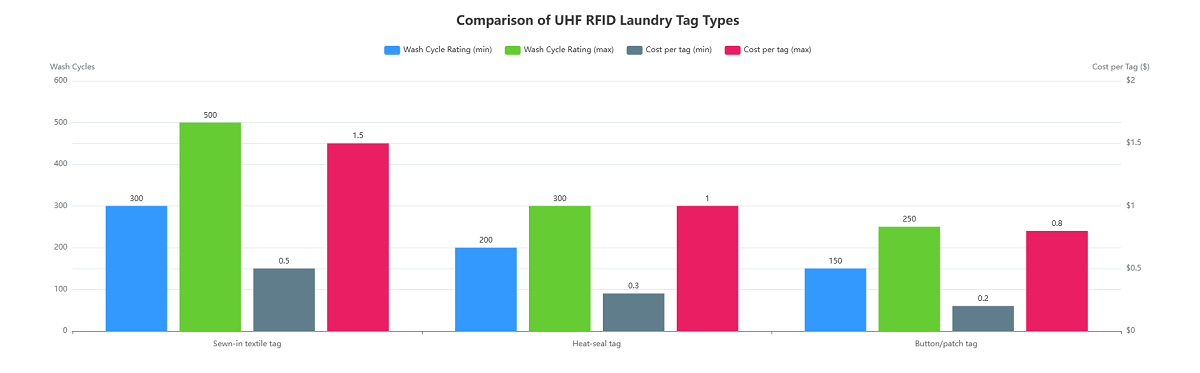
Sie können optimale Leistung in Hotel- und Krankenhauswäschereibetrieben erzielen, indem Sie den haltbarsten UHF RFID Wäschetag auswählen. Spitzenoptionen wie eingenähte Textil-Tags und Hitzesiegel-Tags eignen sich hervorragend für raue Umgebungen und bieten hohe Waschzyklusbewertungen sowie Kosteneffizienz. Die Abstimmung der Tag-Merkmale auf die Bedürfnisse Ihrer Einrichtung gewährleistet zuverlässige Nachverfolgung und langfristigen Wert. Berücksichtigen Sie die folgenden Kriterien bei Ihrer Entscheidung:
|
Tag-Typ |
Waschzyklus-Bewertung |
Kosten pro Tag |
|---|---|---|
|
Eingenähter Textil-Tag |
300–500+ Zyklen |
$0.40-$0.75 |
|
Hitzesiegel-Tag |
200–300 Zyklen |
$0.15-$0.35 |
|
Knopf-/Patch-Tag |
150–250 Zyklen |
$0.20-$0.50 |
Tipp: Konzentrieren Sie sich auf Haltbarkeit, Kompatibilität und echtes Feedback aus der Praxis, um den Wert Ihrer RFID-Tags zu maximieren.
Ein UHF-RFID-Wäschetag ist ein kleines Gerät, das Sie an Textilien anbringen. Es nutzt Funkwellen, um Ihnen zu helfen, Wäsche, Uniformen und andere Gegenstände während des Waschens und der Handhabung zu verfolgen und zu verwalten.
Sie können Etiketten auf Stoffe aufnähen, sie per Heißversiegelung anbringen oder in Taschen einsetzen. Wählen Sie die Methode, die am besten zu Ihrem Textiltyp und Ihrem Waschprozess passt.
Die meisten hochwertigen Wäscheetiketten halten mindestens 200 industrielle Waschzyklen aus. Einige Premium-Etiketten können je nach Material und Verarbeitung bis zu 500 Zyklen überstehen.
Ja, Sie können diese Etiketten sowohl in Waschmaschinen als auch in Trocknern verwenden. Sie sind beständig gegen hohe Temperaturen und Wasser, sodass sie während des gesamten Waschprozesses funktionsfähig bleiben.
Bei korrekt angebrachten Etiketten werden Sie keine Beeinträchtigung des Tragekomforts bemerken. Hersteller gestalten die Tags schlank und flexibel, sodass sie sich unauffällig in Textilien einfügen, ohne Reizungen zu verursachen.
Sie können einen UHF-RFID-Reader verwenden, um Hunderte von gekennzeichneten Artikeln in einem einzigen Durchgang zu scannen. Dieser Prozess beschleunigt Inventurprüfungen und reduziert manuelle Arbeit.
Ja, diese Etiketten verwenden Materialien, die Sicherheitsstandards erfüllen. Sie sind hautverträglich und für den Einsatz in Krankenhausumgebungen geeignet und gewährleisten den Komfort von Patienten und Personal.
Sie können individuelle Größen, Formen und Kodierungen anfordern, die den Anforderungen Ihrer Einrichtung entsprechen. Viele Anbieter bieten Massenprogrammierung und Verpackungsoptionen für eine einfache Implementierung.
No. 225 , 2F , Hombo innovation Technology Industrial park ,Qingning Rd .Longhua district ,
Email : info@zjiotech.com
Principal Lisa. : jimmy@zjiotech.com
(24 Stunden Kundendienstleistungen)
Telefon : +86(0)755 21013852


 Deutsch